

Other than the “c” word, there’s not much a puppy owner dreads hearing more than that their pup has parvo. After all, it’s practically a death sentence, right? Especially if you can’t afford to fork over the $5000 to $10000 dollars that veterinary care will run you nowadays.
Not so fast. Like with many illnesses, it’s not the virus that kills, it’s the ensuing dehydration. If you can manage to keep the dehydration under control, your puppy has a strong fighting chance, especially with the right supplements.
We choose not to vaccinate our dogs for anything other than rabies. Every visit to the vet would result in a condescending, “You do know parvo is REAL, don’t you?” Yeah, we know it’s real. But we also know that hyperactivating our dog’s immune system "just in case” they’re exposed to parvo will lead to other health issues down the road. It’s a risk we’ve been willing take, and so far, none of our dogs have come down with parvo.
Until now.
We’re not sure how they were exposed since these dogs rarely leave the farm, but coyotes and foxes can spread parvo. There also was a day when Sissy chased a neighbor’s dogs off our property and all the way back to their home, and I suspect that’s where it came from because exactly one week later - the typical incubation period for parvo - Sissy hesitated to eat dinner. Our Anatolians are extremely food motivated, so any hesitation to eat is a cause for concern. But since the girls had just turned nine months old, I chalked it up to her probably getting ready to start her first heat cycle, especially since none of the other dogs hesitated over their dinner.
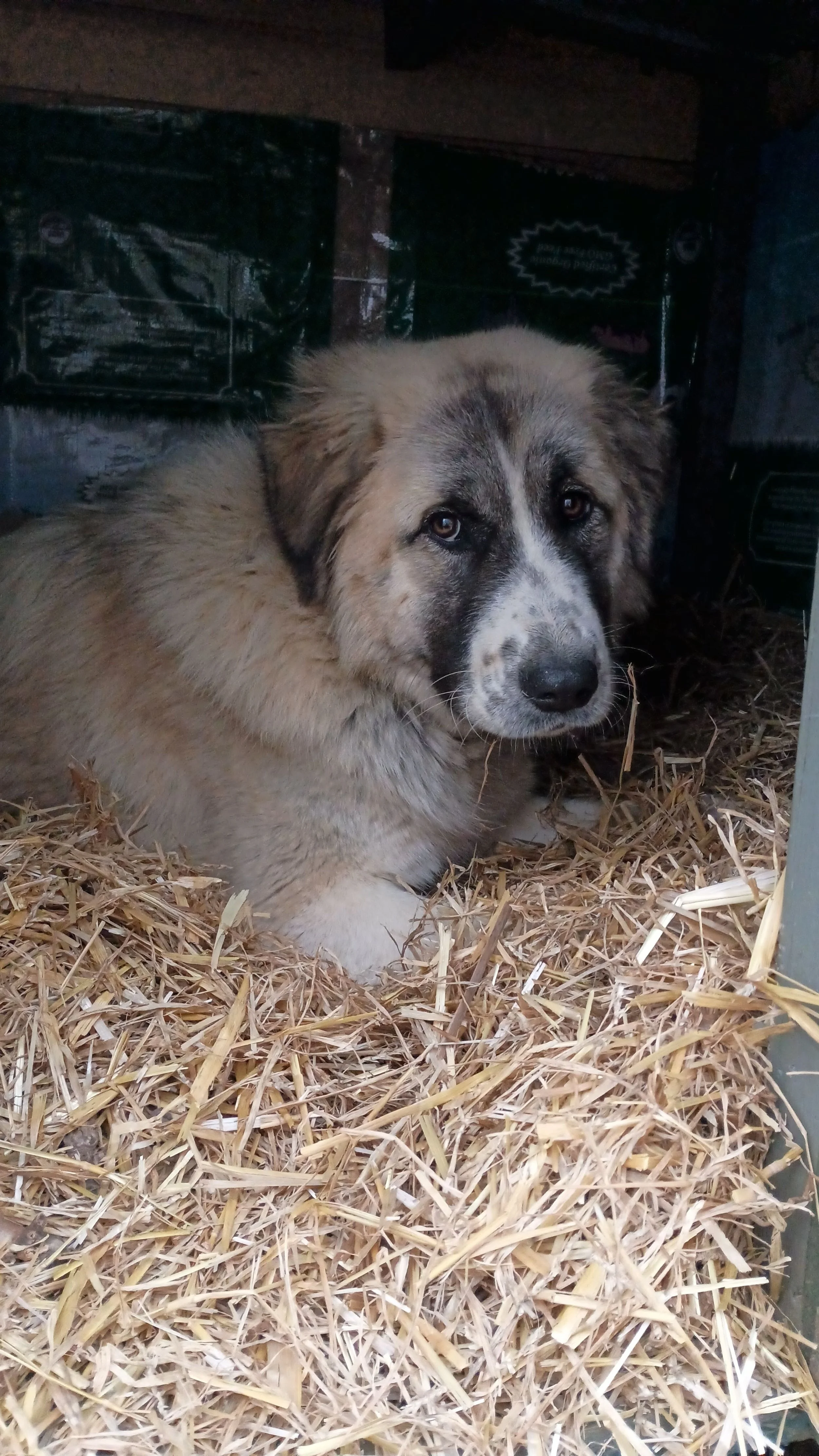
Sissy in her kennel.
Sissy didn’t eat at all the next day, but she seemed mostly okay other than that, so I still didn’t worry. But then she didn’t eat the next day either, and was definitely giving off sick vibes, so off to the vet we went. None of the other dogs showed any signs of sickness, and she wasn’t running a fever, so I suspected she’d eaten something she shouldn’t have. While we were waiting for her to be seen, we walked her around outside and we had our next clue - bloody diarrhea. We collected it for the vet and the exam began. Within minutes we had our answer - despite not having a fever, Sissy had tested absolutely, definitely positive for parvo.
I’d read a little bit about parvo before, but didn’t have any idea where to start with treatment. The vet had a protocol ready to roll - monoclonal antibodies for $1000, powerful antibiotics, anti-nausea meds, and hospitalization with IV fluids for $2000 a day - but we knew we probably wouldn’t be taking that route. I called our holistic raw pet food supplier, and she pointed me to Wolf Creek Ranch Organics, who has a very successful protocol for treating parvo. I read through their treatment plan and talked to them on the phone, while also speaking with the vet and deliberating over our course of action with my husband. We chose to have the vet administer subcutaneous fluids and the anti-nausea medicine, leaving us with an almost $600 vet bill just for that. Then we took our sick dog home against veterinary advice, with the warning that she would most likely die.
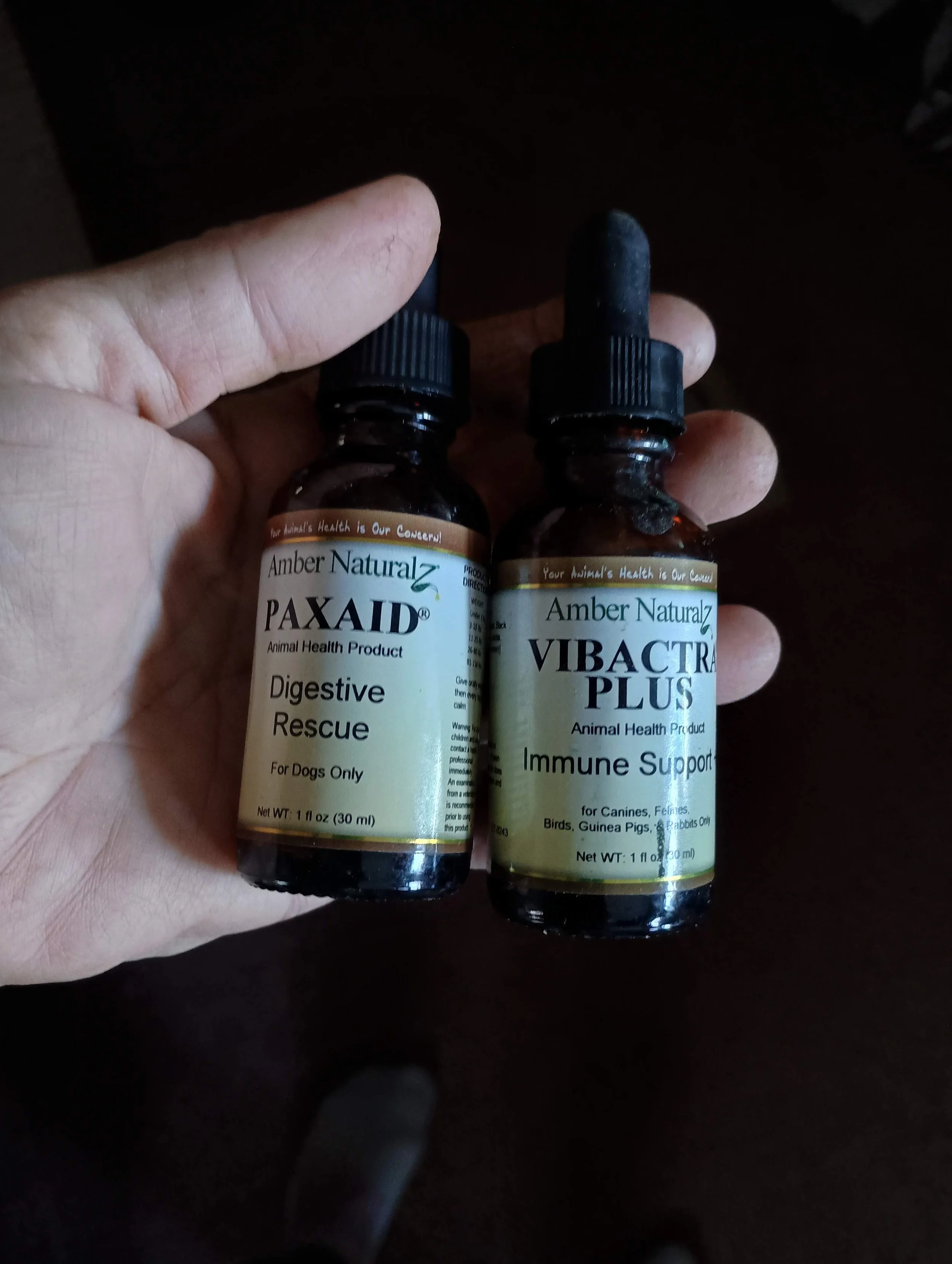
The Wolf Creek Ranch parvo protocol can be found here and here, and I recommend reading through it so you’ll have an idea where to start in case you ever need to treat your puppy for parvo. We overnighted their Paxaid and Vibracta Plus tinctures, and while waiting for them to arrive, we made the recommended emergency tea recipe and began administering it. In the future, I will be sure to always have those two tinctures on hand - they’re not that expensive, they can be used for other digestive issues, and the shelf life is several years. I also added in activated charcoal based off the parvo protocol found on one of my favorite sites, earthclinic.com (protocol here). I won’t cover these protocols in full detail as both websites have copious amounts of info. If you’ve read through the protocols and need additional help, give Wolf Creek Ranch Organics a call. The gentleman who answers the phone is one of the most helpful people I’ve ever had the pleasure of dealing with.
The next couple days were very intense, with a lot of vomiting and diarrhea on Sissy’s part. I was glad for the mild weather and the fact that our dogs are outside dogs - we live in a tiny RV and there was no way we were going to bring a dog spewing out of both ends inside. We kept a close eye on her during the day, and stayed in the barn with her at night. She had absolutely no interest in eating, though she did occasionally have a few licks of water. It had to be plain, though - any hint of anything in it, even broth, and she wouldn’t touch it. We had to force her to take her medicine, which was quite a battle with a 70lb dog who somehow still had enough energy to fight us despite looking like a famine victim. We’d hesitated to use the enema method of administering her medicine doses, but it turned out to be significantly easier than trying to administer it orally, and it has the added benefit of being good way to hydrate a dog who can’t keep anything down. Using both methods is best, but if she spit out her medicine, at least we knew she was getting some in her the other way.
While obviously sick, Sissy was able to get up when she needed to go to the bathroom, so we never worried too much about her. Protocol is to confine your dog so the virus doesn’t spread to the others, but I figured they’d already shared a water dish and been exposed for several days so there was little point. Mom and dad were too old to get very sick from parvo, which rarely affects dogs over one, and we started the preventative treatment recommended by Wolf Creek Ranch with her sister, Izzy, right away. Sissy had first hesitated to eat on a Tues, and by Sunday evening she was starting to eat a little on her own. By the following Wednesday, she was back to her old self. The tinctures were actually delayed in transit, so we didn’t even have them until Monday afternoon, when Sissy was already doing much, much better. On the downside, the delay meant that we didn’t have the tinctures to use as preventative treatment for Izzy, but we did have the tea and charcoal.
Unfortunately, Izzy soon showed signs of being ill despite the preventative treatment with the tea and charcoal. While Sissy was turning the corner on Sunday, Izzy showed her first hesitation to eat. We weren’t too worried, though. Sissy had been sick, but recovered quickly. All I can say is that I’m glad I decided to put the tracking collar on Izzy Monday morning when she didn’t eat, because by Monday evening she had decided to hide and I never would have found her without it. I think she would have chosen to die in the brush. The next three weeks were a nightmare rollercoaster that felt like they would never end.
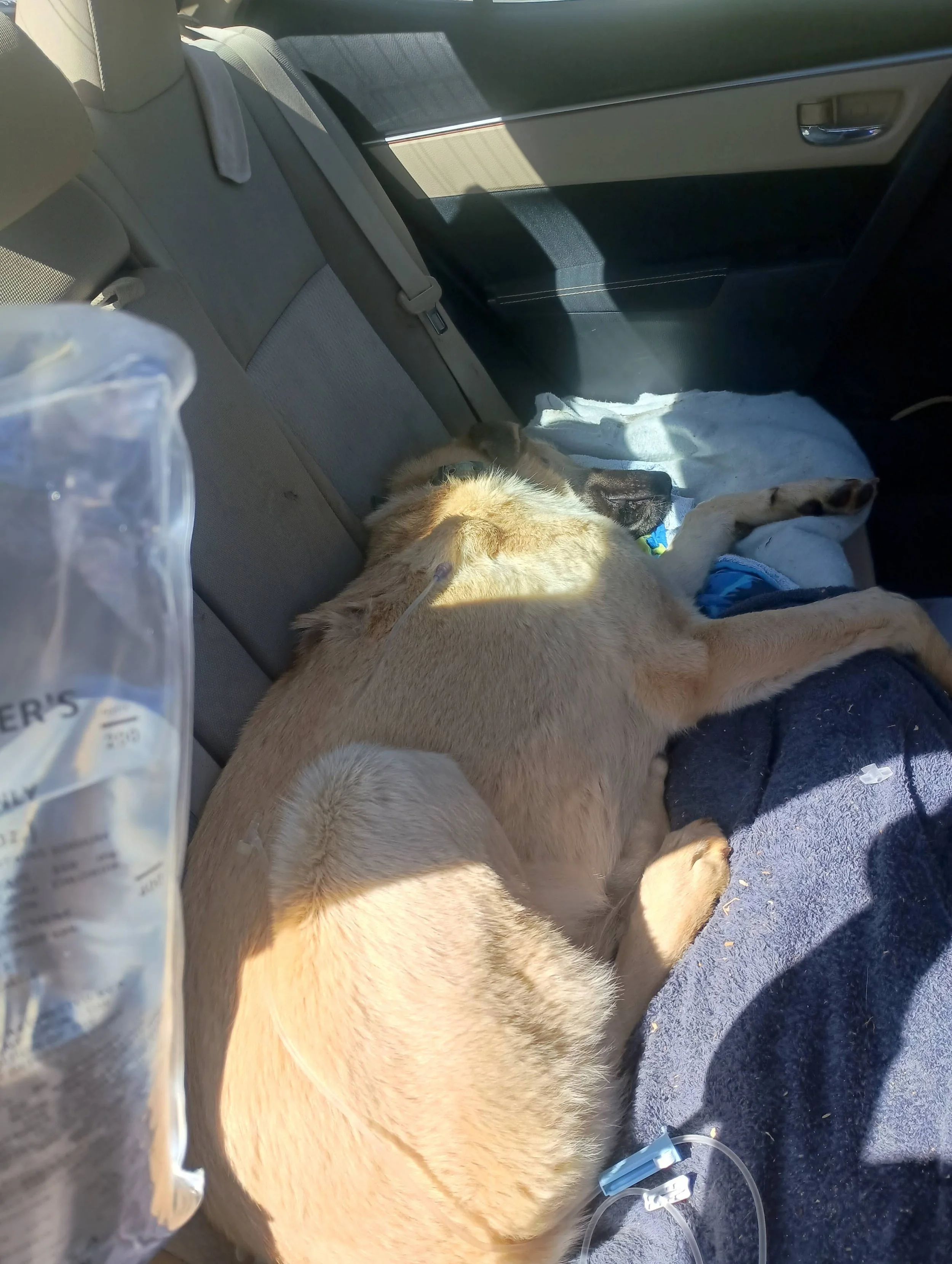
Our mobile vet clinic - the backseat of our car!
Sissy had only needed the 1/3 of a liter of subcutaneous fluids given by the vet. With Izzy, we should have started fluids right away but didn’t. We thought she wouldn’t get as sick since we’d been treating her with the tea and charcoal from the get go, but she got much, much sicker. My guess is that she got much sicker because she was exposed to a much higher viral load from being in close contact with her sister, and that the tea wasn’t enough of a preventative compared to the tinctures. Not only that, but according to Wolf Creek Ranch’s website, dogs with heavy worm loads are more susceptible to parvo. We’d been planning to deworm everybody because Izzy was looking a little thin compared to her sister, but hadn’t started yet. As farm dogs that think cow and chicken poop are fine dining, I’m sure a heavy worm load was another contributing factor. I believe the terrain is more important than the germ, and maybe Izzy’s terrain wasn’t quite up to snuff.
We ended up going through four liters of sub-q fluids with Izzy over the next week, which we administered ourselves. We started with the first bag on Tuesday, along with the anti-nausea medicine. She couldn’t keep anything down and wouldn’t even try, and her dehydration was severe. We started enemas that day too. On Weds, I had nobody else to help me administer the fluids and the vet’s office refused to help unless we admitted her for hospitalization, so I drove her to Bob’s work and he came outside and we gave her fluids in between his meetings. By Thursday, she couldn’t get up by herself, so we had to carry her to go to the bathroom. We gave her so much fluid, both rectally and subcutaneously, she ended up developing edema in her legs. We had to, though, because she was still showing signs of severe dehydration. We needed to solve the immediate problem and worry about the secondary one later.
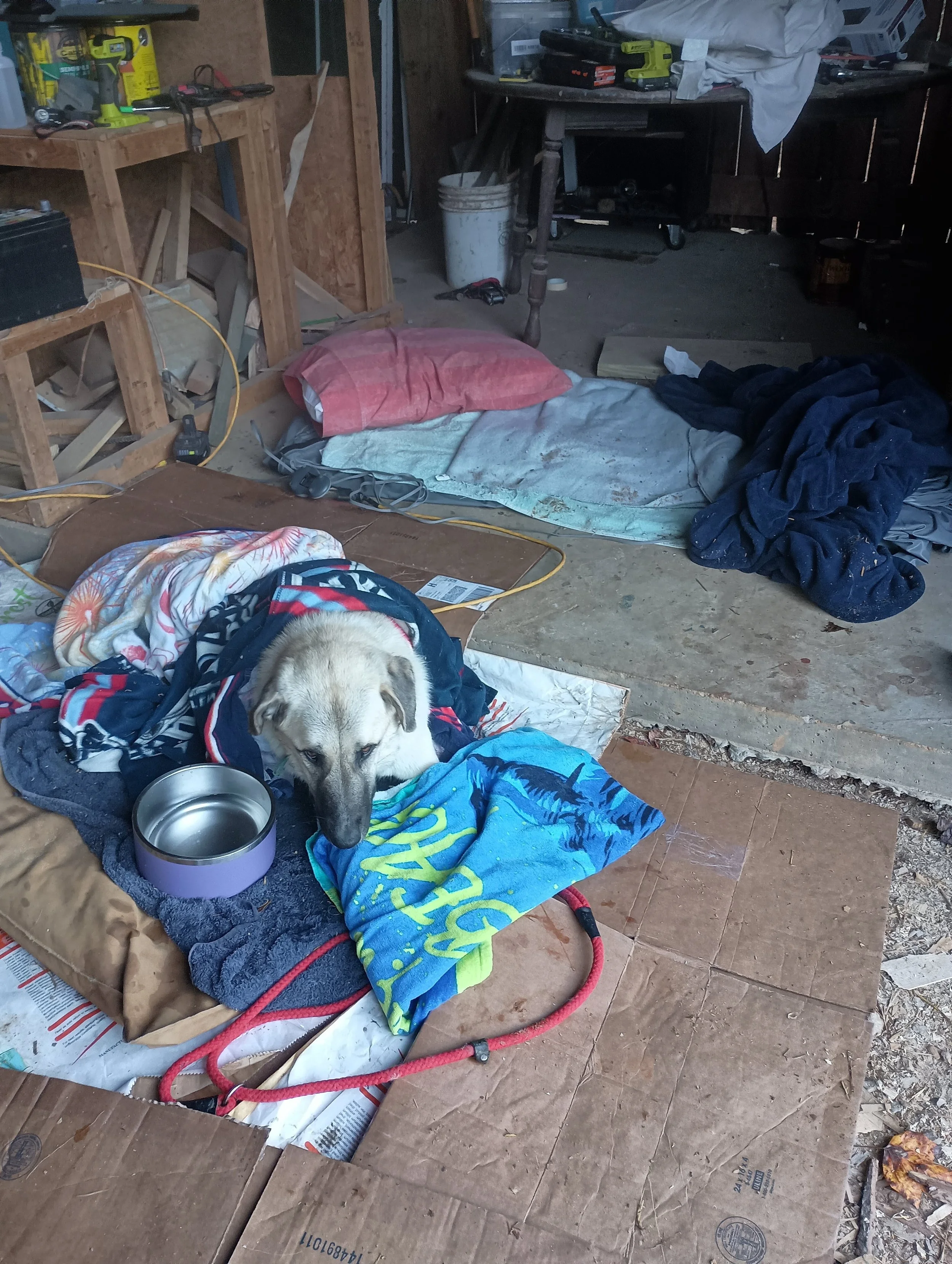
Izzy’s sick bed with our pallet behind her.
Just like with Sissy, it was still a battle to get medications into her orally - every hour - but we battled on. Somebody was with her 24 hours a day, watching her, reassuring her, helping her to the bathroom, giving her medicine, and trying to get her to eat or drink. It was a full time job and we and our children worked in shifts. I couldn’t lift her on my own, so somebody had to come help me every few hours during my shift. We considered hospitalization, but besides the money issue, we didn’t think she would survive in someone else’s care. I’m pretty sure she only lived because of the constant attention she was getting from us, which wouldn’t have happened in a hospital setting. During this time the temps dropped to just below freezing at night, but we still slept in the barn with her - Izzy on a heated dog bed with blankets on top, and us with all our winter gear and the electric blanket.
By Friday she was drinking a little on her own, but still refusing to eat, and very, very weak. A vet tech friend told us we needed to get calories into her right away and recommended goat milk, so we started trying to syringe raw goat milk into her. It did not go well. Between possibly aspirating the milk and the change in temperature, on Saturday Izzy developed a high fever, a respiratory infection, and a bloody nose. Secondary infections are very common with parvo, which is why antibiotics are usually prescribed even though it’s a virus. Any progress we’d made was now reversed, although she was at least not vomiting any more (the bloody diarrhea was another story). Besides all the other medications, I added in methylene blue, which is one of my favorite antiviral/antibiotic medications. It is not entirely “holistic”, but it works quickly with no side effects and I wanted something a bit stronger than the natural herbal antibiotics in the tinctures she was already taking. Any time I’ve had difficulty clearing an infection in myself, the dogs, or the cattle, methylene blue has almost always worked. (Link to a coupon code for the methylene blue I use here in case you want to try it - it is an affiliate link but I really do swear by it.)
Izzy’s infection got better by Monday, and she started drinking on her own again and having “egg water” - diluted whisked raw egg. She no longer showed signs of dehydration, praise God. But by then the parvo had settled into her joints, which is rare but can happen. She had a lot of pain, and cried when we would move her or carry her. I used castor oil and essential oil packs with a hot water bottle over her forelegs and ankles, which were the most swollen. It was a full week later - the amount of time it had taken Sissy to fully recover, and Izzy still couldn’t get up to even take a drink without help, never mind going to the bathroom. Meanwhile, Sissy was full of energy and had nobody to play with her, and was getting herself into a lot of trouble!
Though her gums were now a good color and she was no longer showing signs of dehydration, Izzy’s urine was still very dark. Organ damage is another concern with parvo. I ordered more tinctures from Wolf Creek Ranch for her liver and kidneys, to be sure she was clearing everything out. We were still doing enemas at this point, both for hydration and medicine dosing, including the MSM powder I’d now added in for her joint pain. We cleared Walmart out of all their disposable enemas kits more than once, and we couldn’t help but joke about what the employees thought was going on at our house!
For the rest of the week she improved bit by bit, but very slowly. She drank more. She’d eat a little - I’d prepare her a smorgasbord of choices every few hours, including whisked raw egg, pureed raw beef liver, raw goat milk, broth, their normal raw meat mix, yogurt, soaked kibble… Izzy was definitely getting the princess treatment! We’d offer her each item one by one and most foods would be refused, but which ones changed each time. The only thing she’d consistently eat was the raw egg, but she would at least eat it with the medicines added, which made life much easier for us now that we didn’t have to try to force them down her throat - or up the other end. She was eating 8 -10 eggs a day, and if I mixed in the dogs’ “Longevity” supplement powder from Springtime Supplements that has all kinds of good things in it, she would lick the bowl clean.
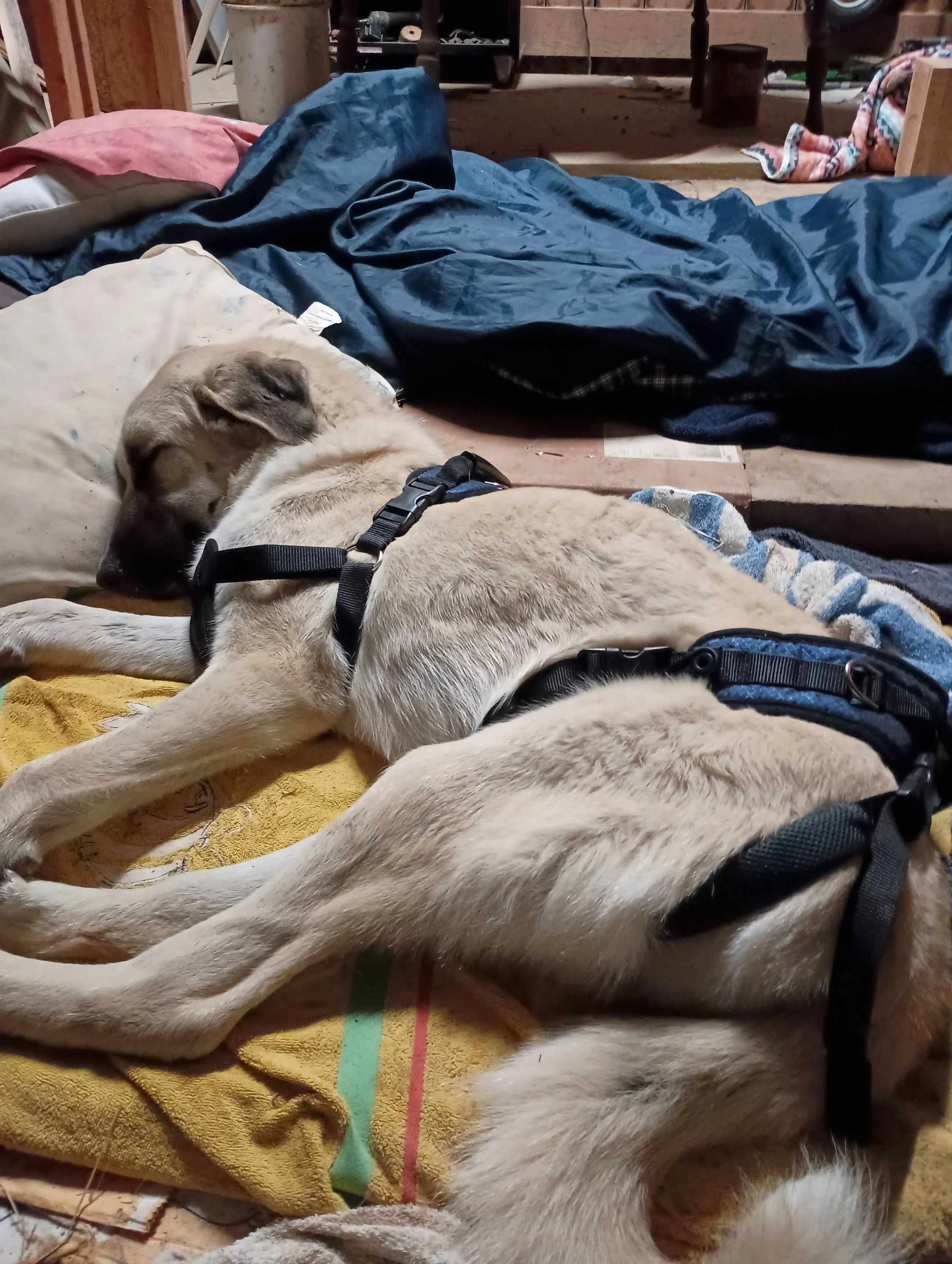
Izzy with her harness.
By the next Saturday, which was now day 12 of non-stop care, she still couldn’t get up by herself, was still having diarrhea, and was still being very picky about eating. We bought some ridiculously expensive raw food formulated for recovering sickly dogs, but she wouldn’t touch it. We also bought a walking harness designed for dogs who needed help walking. The problem with the harness was that it was meant for dogs who would at least try to walk but needed assistance. Izzy just hung from it and collapsed if we didn’t support her entire weight.
On this same Saturday, Sissy came down with the high fever, respiratory infection, and bloody nose that Izzy had had the weekend before, so now we were back to treating her as well. At least she continued to eat and drink on her own. And earlier in the week their mom, Dolly, had gotten a piece of a branch lodged deep in her foot between her toes, so we were also treating her twice a day - cleaning it out, reapplying medicine and bandaging, and trying to keep her from running around like crazy. It seemed like our home veterinary care would never end! Never mind all the usual homestead chores - thank God none of the other animals decided to be in crisis during this period, though we did still butcher two of our sheep on that same Saturday because that was when we had somebody coming to help us.
Every day we’d try to encourage Izzy to support a little more of her own weight whenever we got her up to go to the bathroom. And finally, praise God, she started to walk on her own without the mobility harness - bit by bit, for short distances, looking like an emaciated drunk toddler and collapsing when she’d made it to wherever she was going. But it got better every day. While she was still having very loose bowel movements, they were no longer uncontrollable. The temps dropped below freezing again, so we let her sleep inside the RV at night. After an accident the first night that wasn’t really her fault - she wasn’t housebroken and didn’t know to wake us to go out - we took turns sleeping on the floor next to her so we’d wake if she got up. She began to eat more and more, and stopped being so picky. She was getting better, Hallelujah! Sissy was all the way better again, and Dolly was healing up nicely too. Was it really almost over?
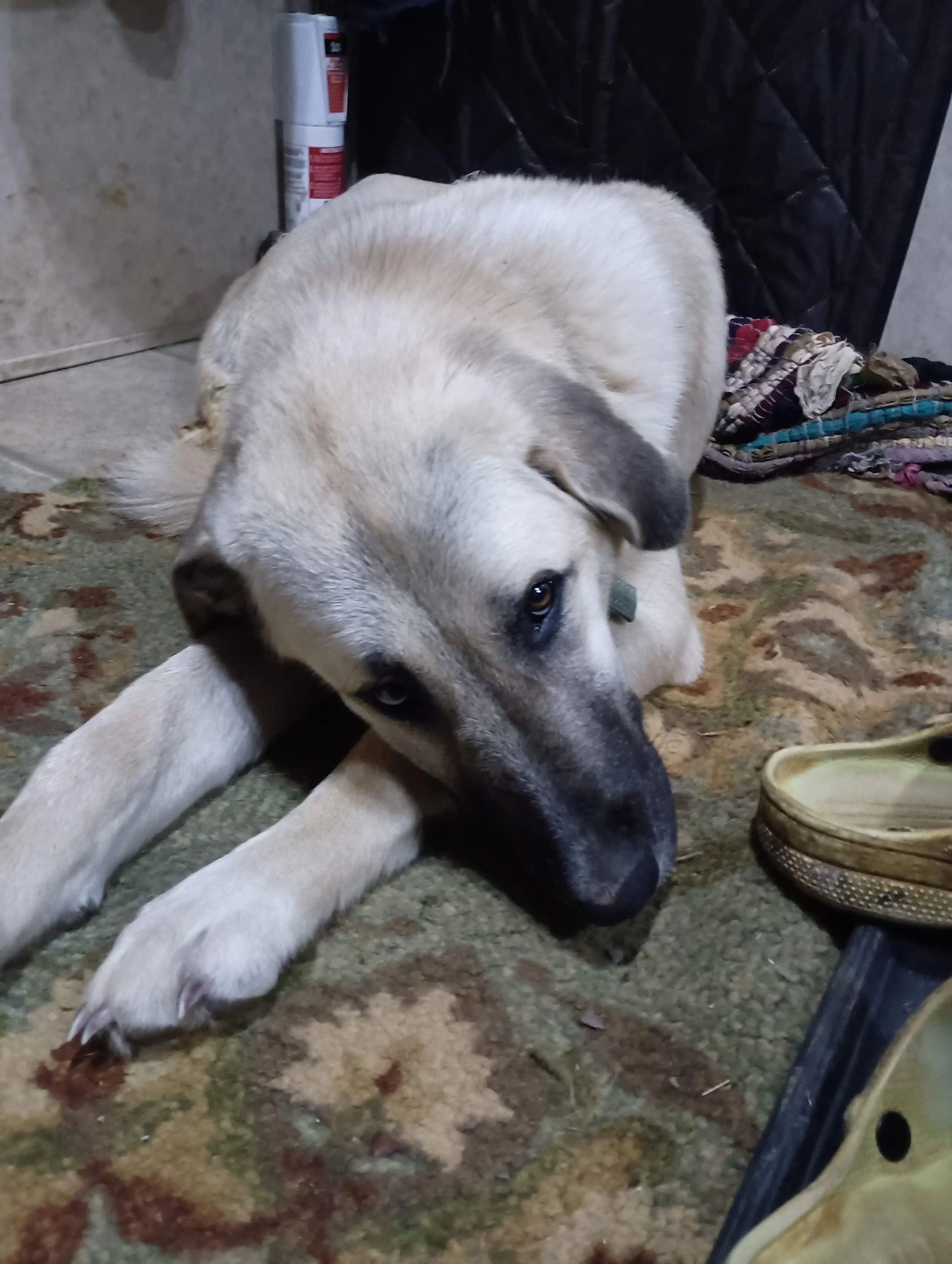
She’s an inside dog now, I guess.
It took over five weeks before Izzy was back to normal weight, normal bathroom habits, and normal activity levels. It feels like it was much, much longer. I caught her chasing chickens last week, at which point I declared her fully healed. She still sleeps inside - she makes a beeline for the door every night, and we let her in because we worry that the winter nighttime temperatures might be too much for her recently weakened system. She seems to have housebroken herself, so I guess we have an indoor dog, at least until spring.
And we have the experience of having pulled two puppies through parvo, along with the secondary infections.
So why did they get parvo when none of our other dogs ever have, especially at an older age when it usually isn’t as virulent? I’ve been told outbreaks come and go in approximately ten year cycles. While we were at the vet, several other dogs were diagnosed with parvo (all of them vaccinated), and they mentioned that they’d been seeing multiple cases that week, far more than normal. One of the girls’ littermates who lives about two hours away from us also came down with parvo a few days after Izzy. Fortunately we had the knowledge and experience to walk them through home treatment, and their girl recovered quickly. And unlike in our case, the preventative protocol kept their younger puppy from getting sick too.
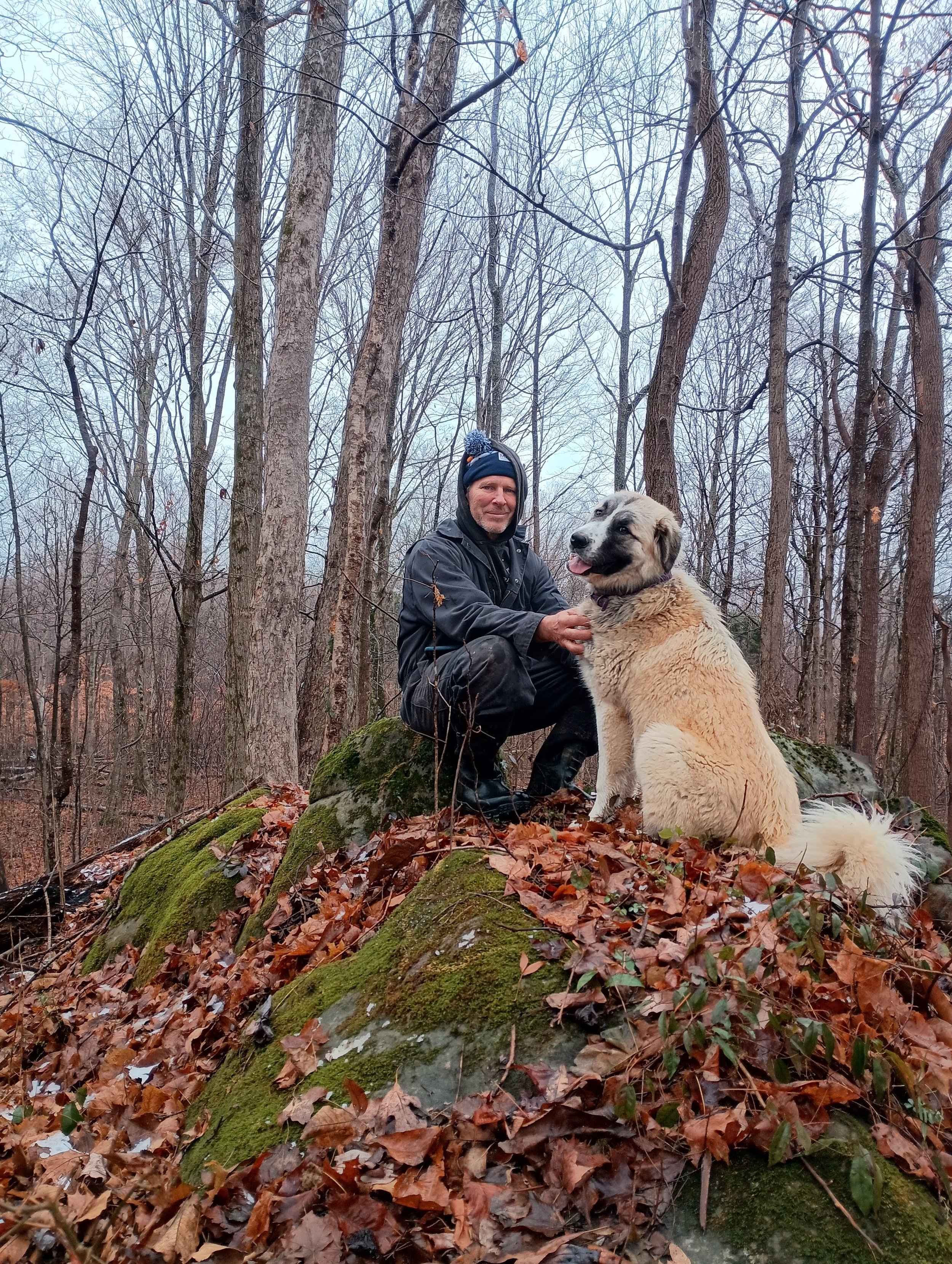
Bear Mountain Lavender Stream, aka ‘Sissy’, back to her usual self!
I wouldn’t be surprised if the Bravecto tick medicine we gave them this past summer was a contributing factor for a weakened immune system and getting parvo. We still haven’t found a natural way to deal with the overwhelming numbers of ticks we have, but we’ve never before used it on puppies. Hopefully by the next time we have puppies, our guinea fowl army will be big enough to make a difference!
After reading all this, I know there’s one question on your mind - will we vaccinate for parvo next time? They say it stays on your land for a long time, so the next litter we have has a good chance of being exposed, although they will be raised in a totally different area than where our adult dogs are. Future puppies might be exposed to it at a much younger age, when it might be more difficult for them to survive being so very sick. And we’ll have far more than two sick puppies to care for if they do come down with it while they’re still with mom. On the other hand, their mom should pass the antibodies on to them when they’re nursing, which we allow until 8-10 weeks old, so if they’re exposed while young enough it might not be so bad. We know the signs and how to treat it. And we can also prophylactically treat with homeopathic nosodes to help keep them from getting so sick.
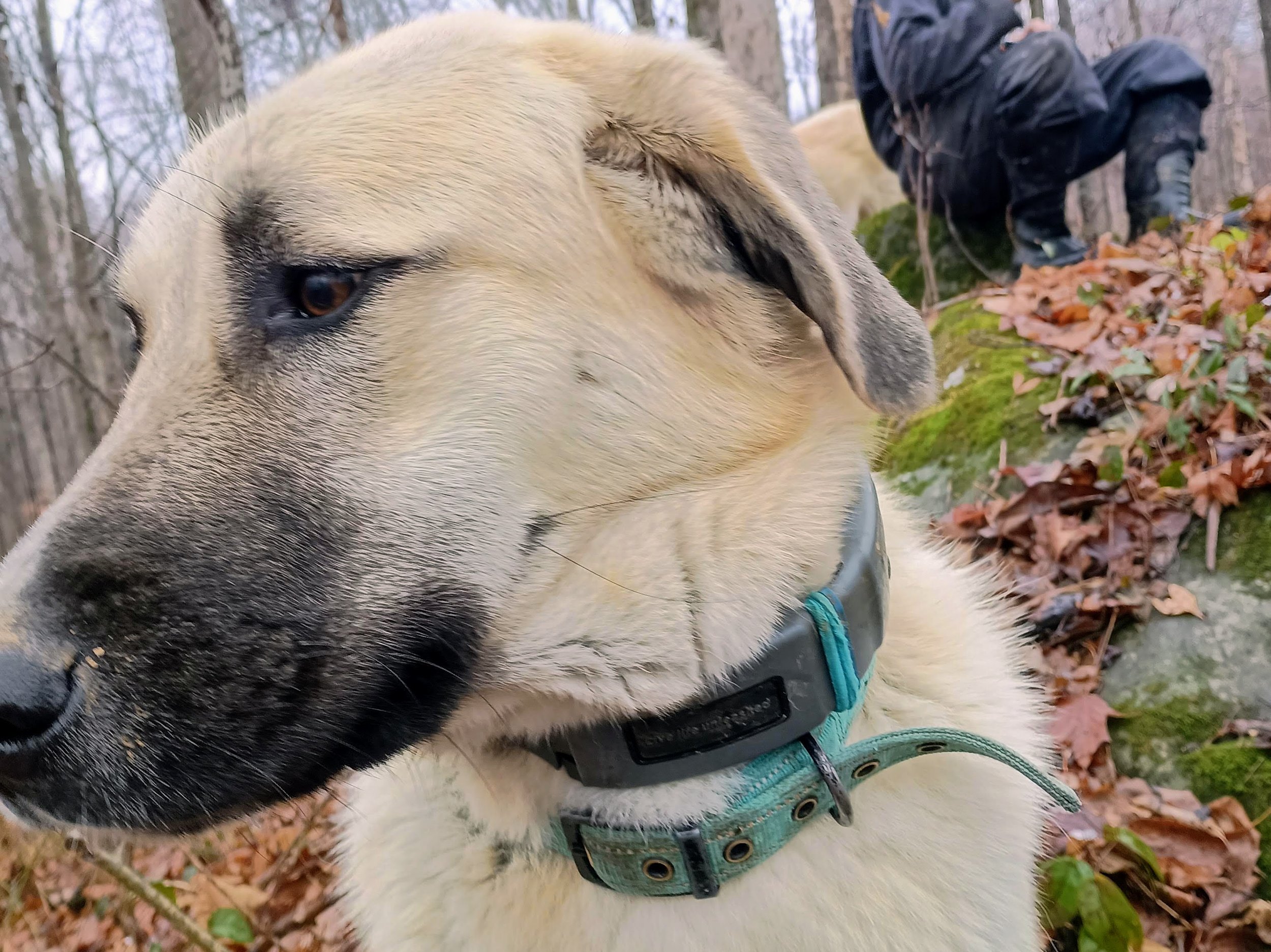
Bear Mountain Opal Island, aka ‘Izzy’, back to her usual self!
The honest answer is that I don’t know if we’ll vaccinate for parvo in the future. If I’d written this when I originally planned to, when Sissy was beginning to recover and Izzy had not yet gotten so very sick, I would have said ‘of course we won’t’. But even without hospitalization, we spent over $2000 on vet bills, medicines, special foods, enema kits, etc, by the time it was over, never mind the weeks of long days and little sleep. A vaccine would have been a lot cheaper, assuming it didn’t cause any long term health issues - a big “if”. And assuming it would have actually prevented parvo - another big “if”, considering the number of cases the vet was seeing. Interestingly, there’s research to suggest that the maternal antibodies for parvo last for up to 18 weeks and actually prevent the vaccines from being effective when given before 18 weeks of age which may be why so many vaccinated puppies still come down with parvo. Immune systems are far, far more complex than “modern” medicine’s current paradigm allows.
I suspect that for future litters we will leave the decision up to buyers, and vaccinate if that’s their preference. Now that our day isn’t non-stop dog care, I’ll have time to do more research on how to holistically prevent future litters from getting sick. Parvo IS real, and it was one of the scariest, most difficult months we’ve had in a long time. I prayed over our dogs every day, and multiple times a day with Izzy. I even anointed them with oil. But the Lord Jesus brought us through it, and now we have the knowledge and experience to hopefully help others get through it too.
So if your puppy has parvo, don’t panic (but do pray, because we should always be praying!). It can be treated - even if you don’t have the Paxaid and Vibracta tinctures on hand, you can get the activated charcoal and everything you need for the emergency tea recipe at your local store while the tinctures are on their way.
And as always, if you have any questions, feel free to email or text. And look for more blog posts soon!