

Bonding with your Anatolians
One of the most important aspects of owning any type of livestock guardian dog is the bonding process. With LGDs, bonding doesn’t just mean that your dog is happy to see you or enjoys being petted - bonding means that your dog trusts you and views you as the ultimate authority, especially in a stressful situation. When your 100+ lb Anatolian needs grooming or emergency medical attention, you really, really need your dog to trust you. This can be tricky to achieve with livestock guardian dogs, especially for those raised outside with the livestock.
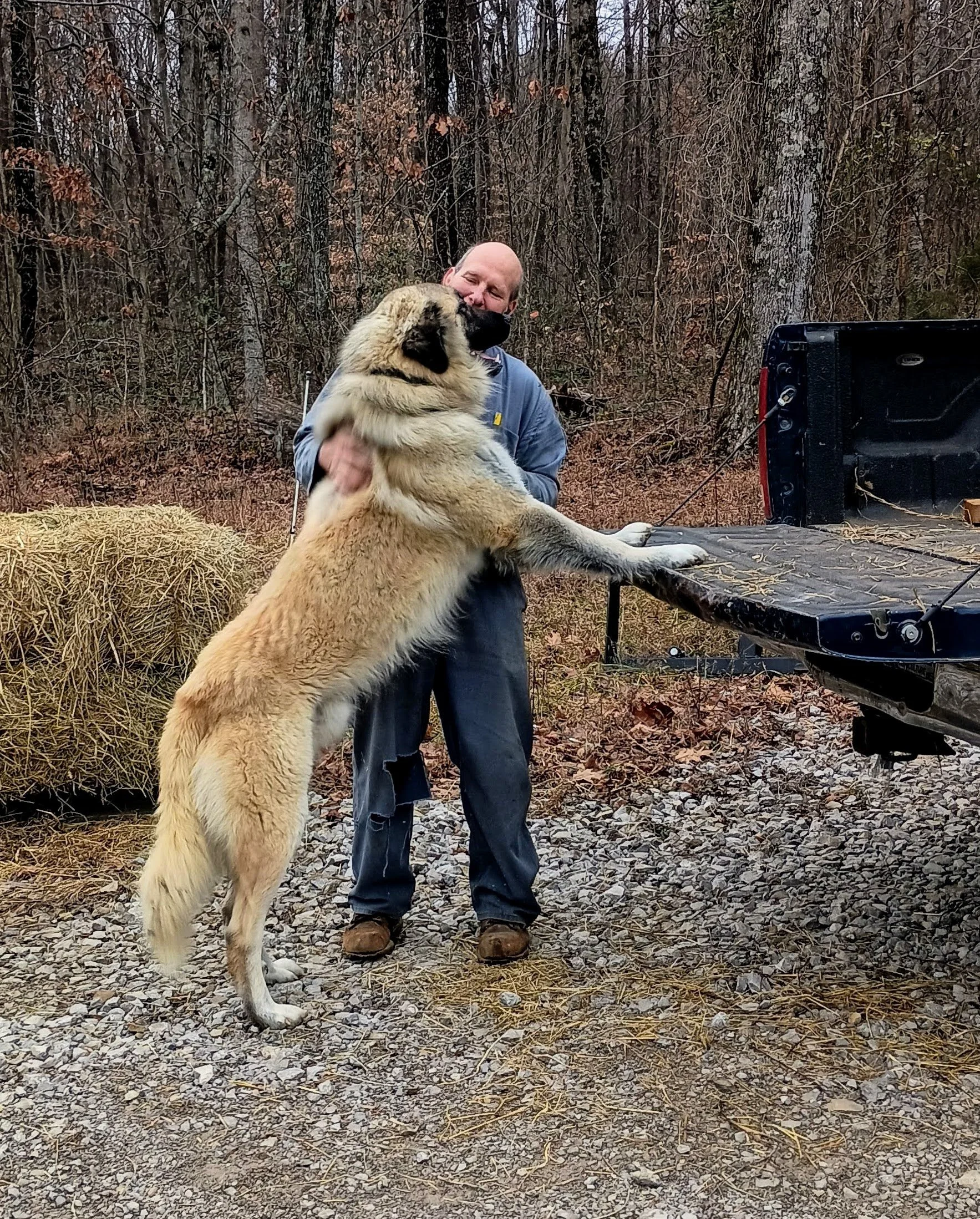
It’s really important that a dog this big trusts you!
LGDs are independent thinkers, bred to make snap decisions without the input of humans, and this earns them the reputation of being stubborn and willful. Owners will often rehome their dogs for being disobedient or “bad” when the dog is doing no more than what is in its nature. Unfortunately, this misunderstanding of LGD nature is quite common. I don’t blame owners, however. There is a wealth of misinformation out there about livestock guardian dogs, and often puppies and older dogs are sent to their new homes without appropriate education. Many new owners simply don’t understand just how different an LGD’s nature is from typical family dogs.
I’m ashamed to say that we fell into this category with our first LGD. Charlie was a purebred Kangal that we brought home at 10 months old. He was being rehomed because “he wouldn’t stop wandering”. His owners couldn’t contain him and the neighbors had threatened to shoot Charlie, and so he was spending most of his day chained. I’d read about Anatolians and Kangals quite a bit, and we were lifelong dog owners, so I thought I was prepared. I knew they often didn’t like strangers and didn’t rehome well. But when we got there, Charlie happily loved on us and let us leash him, and he climbed into our van without hesitation. This was going to be easy!
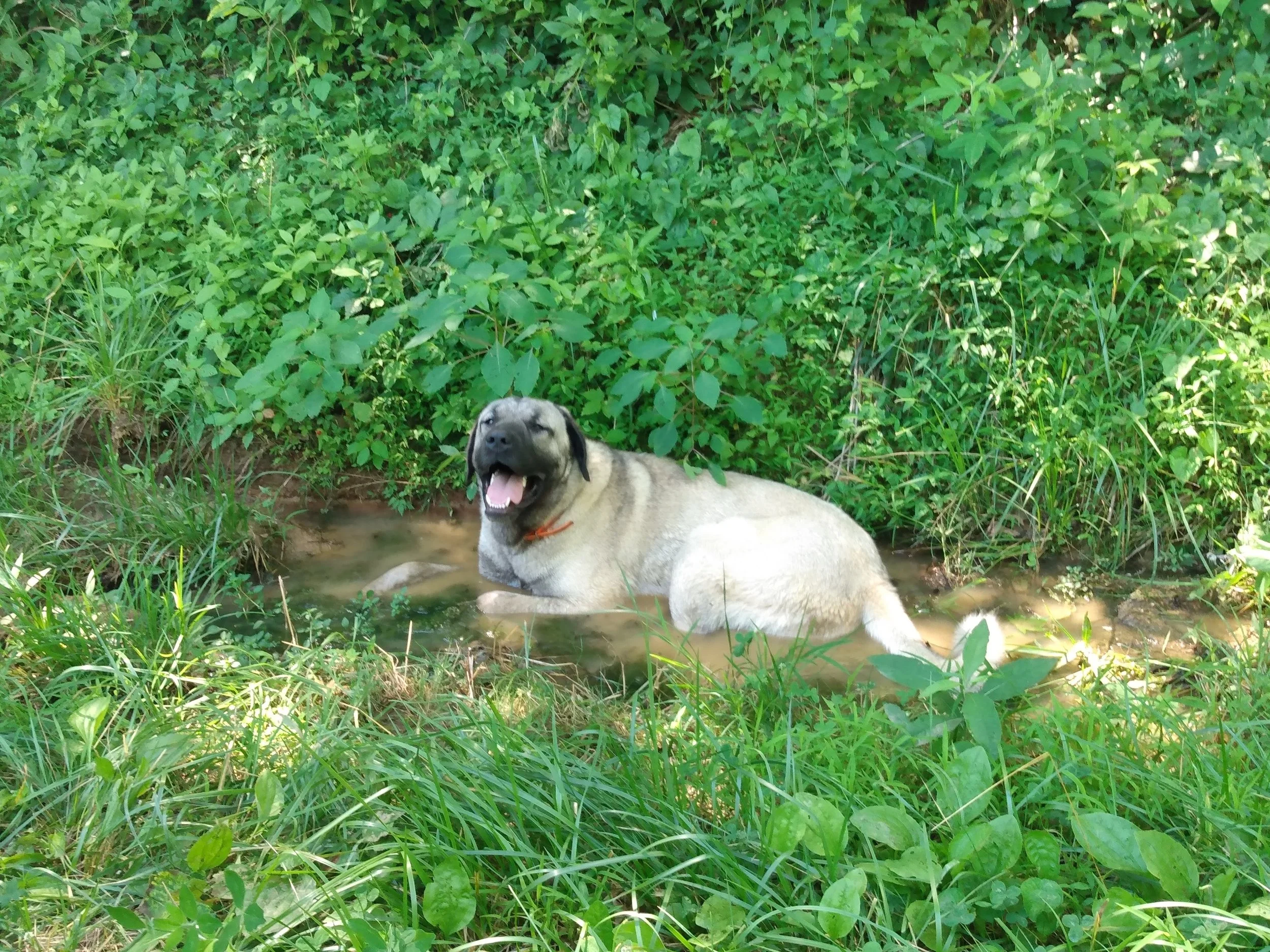
Charlie already escaping on his first day home.
At first, it did seem easy. He was happy to be around us. He loved being petted. And we were in love with our boy. True, we couldn’t contain him either - his favorite thing to do was to jump the fence and go stop traffic - but we were working on it. We’d bonded with him, and we thought he’d bonded with us.
Our farm is on a steep mountainside, so we drive up and down every day for chores. Unfortunately, Charlie didn’t just stop traffic out in the road; he liked to get in front of our truck as we were coming down the mountain too. One day, about four weeks after we got him, it was wet and he appeared out of nowhere, and I couldn’t quite stop the truck in time. I just barely clipped his paw, but it was enough to hurt. I did exactly the wrong thing - in my distress, I jumped out and yelled at him. LGDs, especially if they’re not bonded to you, can be very sensitive to being disciplined. But I didn’t know that and it was a natural reaction. I immediately hugged him and loved on him, and checked him out, and everything seemed to be okay - until the next day. Charlie had crawled under our RV and was licking his paw, and I tried to get him out so I could check it again. He growled at me and that’s when I made mistake number two. Rather than backing down, I challenged him and told him off, which is exactly the wrong thing to do with an LGD, especially one who is hurt (his paw was sore, but otherwise okay). With most dogs, we’re told to assert dominance, but with an LGD you want to create a partnership. It’s important to heed their warnings when they growl, but that’s not what most of us have learned about dog training. I instead tried again to get him out, and he snapped at me.
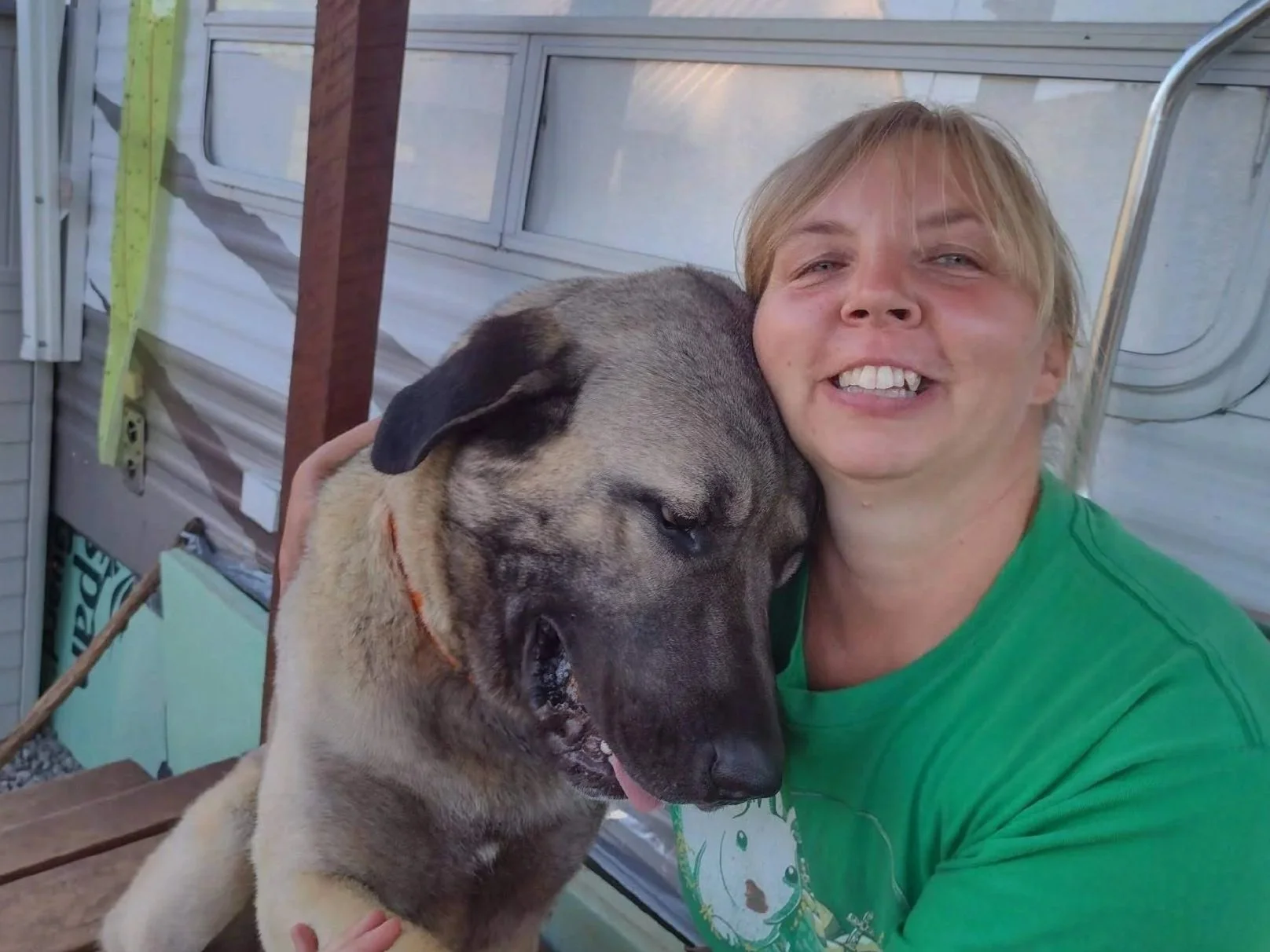
95% of the time Charlie was fine with me.
It only got worse from there. Charlie decided to guard the porch, which meant I couldn’t go in and out of my own house without having to pass him. Most of the time he’d be fine, especially so long as I didn’t look at him, but there’d be other times he’d growl and lunge at me. His dislike for me seemed to come on without rhyme or reason. About 95% of the time we were fine, giving me hope that it was just a passing phase, but then for no apparent reason he’d change his mind. Having a 140 lb dog growling and lunging at you is no trivial matter. My husband would grab him and hold him back, which was mistake number three as it most likely reinforced his negative associations. I contacted his previous owners for help and they said they’d put me in contact with the breeder, but the breeder just blamed me and refused to speak with me. I couldn’t find any reliable advice online but I did my best and tried to make friends with Charlie.
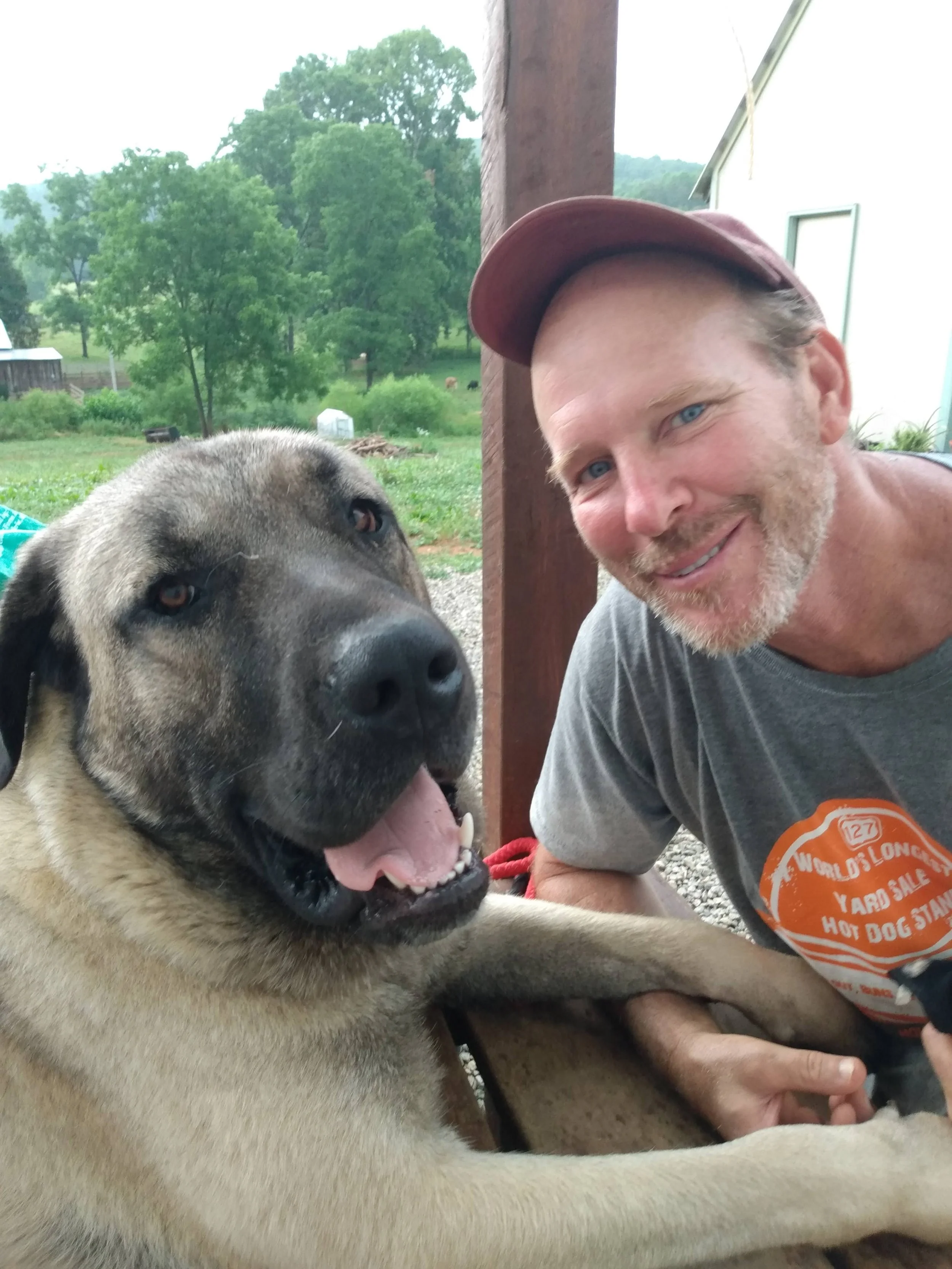
I think he almost chose the dog over me!
Because Charlie’s behavior was only aggressive towards me and not anybody else in our family or anybody who came to visit, and because we also couldn’t contain him, we eventually decided to rehome him too. Well, I decided to rehome him. My husband didn’t want to, but I legitimately feared for my safety. I actually had to tell my husband that he had to choose between me and the dog! Charlie had decided he didn’t like me and I had no idea how to fix it. I didn’t think it could be fixed. Despite making mistake after mistake, I know now that we probably could have repaired our relationship with more time and persistence, but at the time I had no support and received no advice. We also could have learned to contain him, but it was all too much for me. I’ve never, ever had to rehome an animal before and I felt like such a failure. The day he left, he happily got in his new owner’s vehicle, and he let me hug and kiss him goodbye as though nothing was wrong between us. It’s been several years and I still think about Charlie frequently and wonder if he was able to settle into his new home or if his fate was like that of so many LGDs - labeled a “bad” dog and shuffled from home to home to home, or worse, put down. I never contacted his new owners to find out. The guilt was already overwhelming.
So what else could we have done differently?
At its core, the problem was a lack of bonding. Only time could have improved that - Anatolians, Kangals, and other LGDs are very loyal to their families, and it takes adult LGDs a minimum of three months to bond to new owners. The recommendation is for new owners of adult LGDs to treat their new dog as a puppy, focusing on training and bonding time rather than expecting them to “plug and play”. We did do that, but it had only been one month before we had our unfortunate accident. If I’d had a better understanding of LGD nature I might have been able to smooth everything over and continue on with our bonding, but I’ll never really know. This is one of the reasons I recommend that folks with no LGD experience get a puppy rather than an adult. There’s more room for learning along with your puppy, and it is in a puppy’s nature to bond quickly to their family. Almost every negative experience I’ve heard of with Anatolians or other LGDs has involved an older, rehomed dog. That’s not to say that it can’t work out, but it’s best when the new owners are experienced LGD owners who are well aware of the challenges they’ll face.
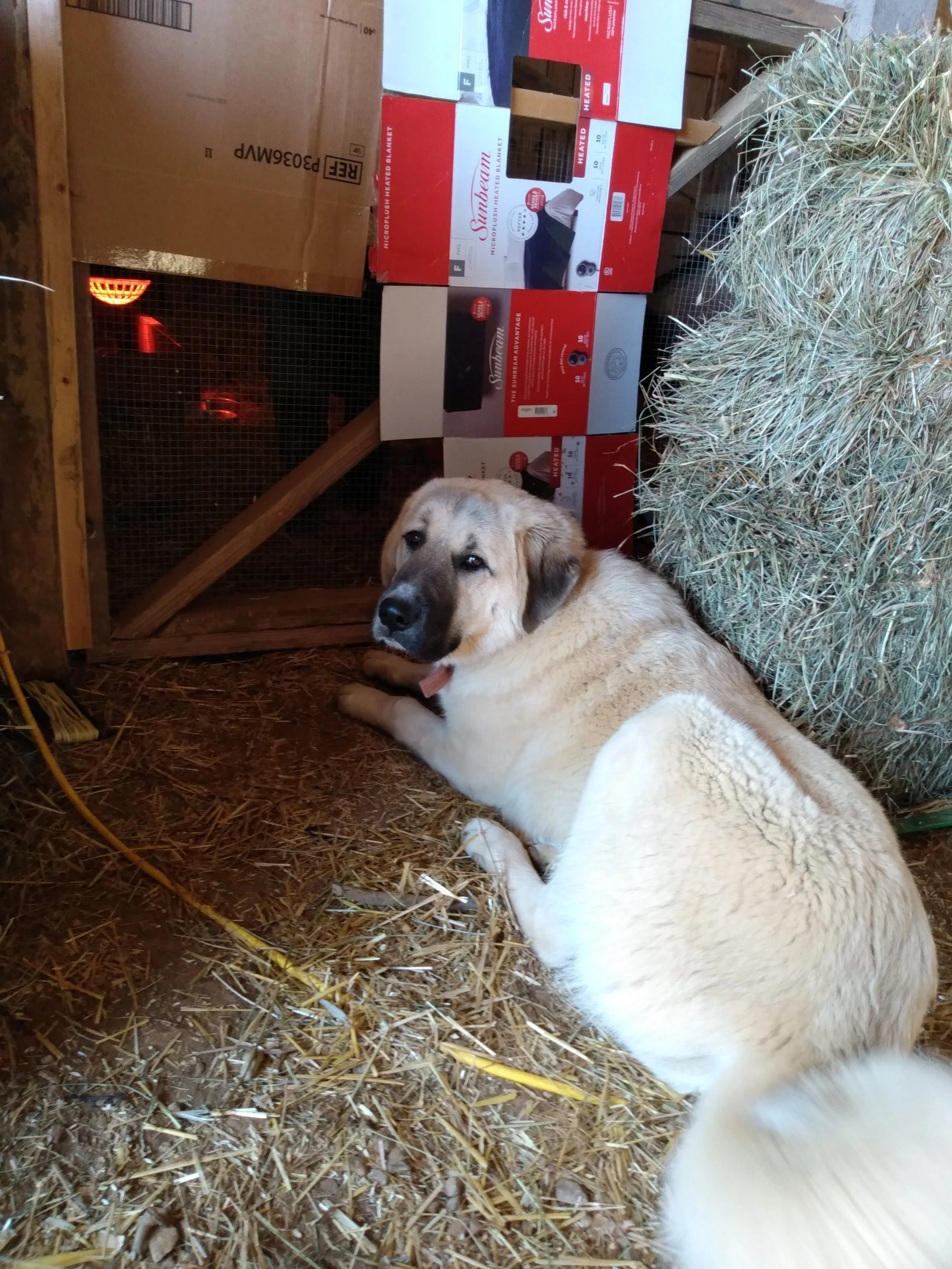
Dolly learning how to guard.
Even with a puppy, bonding can be tricky. The typical method for raising LGDs has been to raise them in the field with the livestock, so they bond first to the livestock. While dogs raised this way may “stick” to their livestock better (this claim is hotly debated, however), it often comes at the cost of bonding to people - and without that bond, at the cost of listening to people. These are the dogs that are often labeled as feral or disobedient, but the fact is that LGDs are notoriously independent. Field raised dogs have not been given a reason to be “obedient” to people. This is why many breeders and trainers now recommend that LGDs be raised “inside and underfoot” just like any other puppy, and transitioned to outside at a year or even two years old. Both camps are of the firm belief that raising a puppy the other way instead of their way ruins an LGD, but I believe that there can be a middle ground.
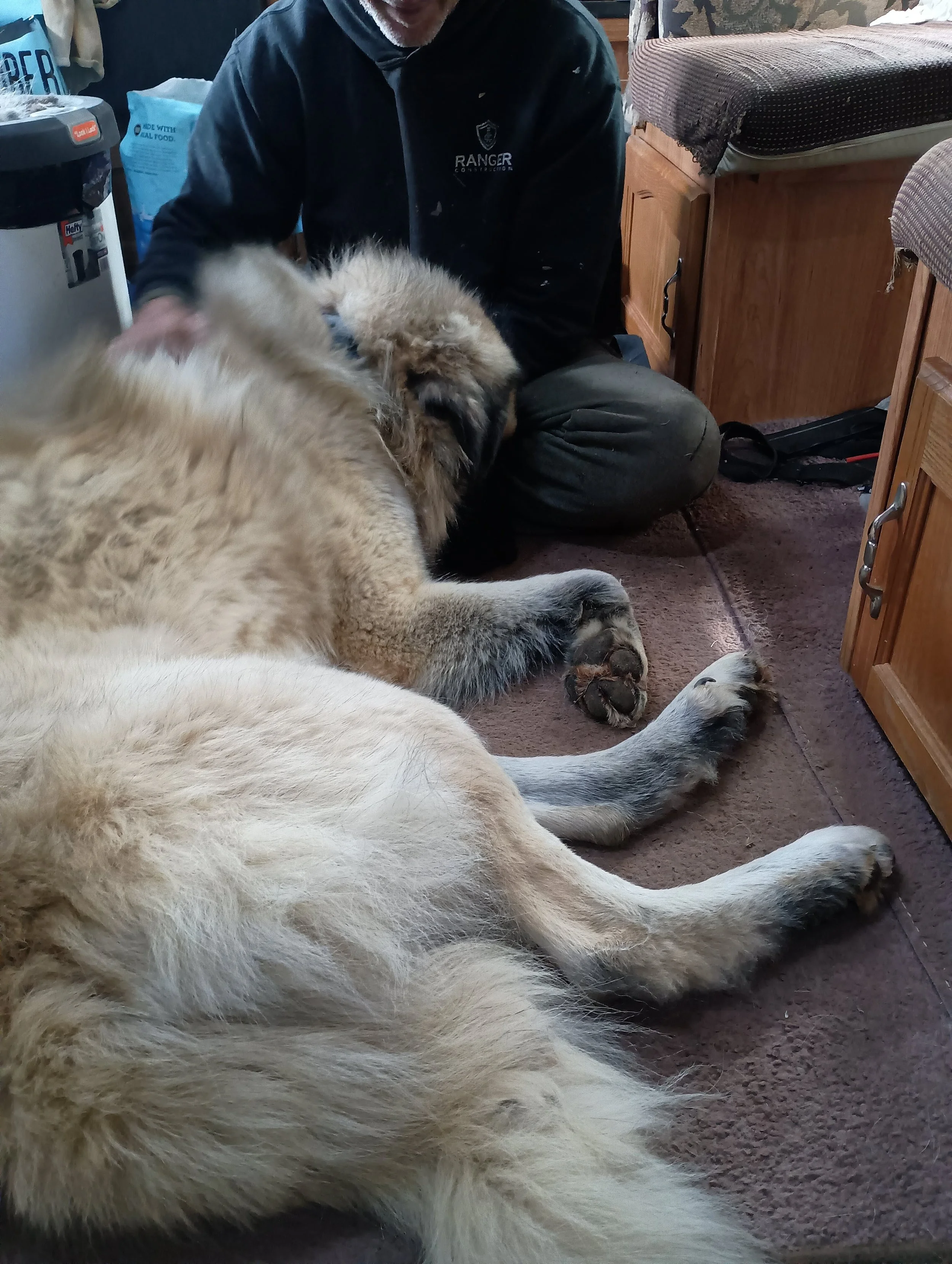
Kenny getting groomed.
We’re in a tiny RV, so ours are not raised inside. However, they sleep on our porch and we are outside with them all day, every day. Because we practice intense rotational grazing, and because some of our cattle really don’t like dogs, we’ve never tried to keep our dogs in with the livestock (there’s barely enough space in our paddocks for the livestock, never mind dogs). Instead, we use them as perimeter guardians on our 130 acres. Our older dogs patrol our property all night and much of the day, and our younger girls are out and about with us during the day and starting to accompany their parents at night too. The older dogs often take up key positions where they can observe most of our pastures, including the livestock, and Kenny instinctively chooses to stick with the cattle during calving season despite never having been trained to do so. Ours don’t “stick” to the livestock 24/7, but they are definitely still guarding them, especially at night. Although we never transitioned ours to staying with the livestock full time, I know many others have done so successfully after raising their puppies inside.
While we’re not as experienced as many out there, we have found the balance that works for us. Our dogs do the jobs we expect them to do, and our dogs are bonded to us and listen to us (mostly - with LGDs, it’s always mostly when it comes to listening). When they need medical attention, they let us attend to them. When they need grooming, we can groom them. Today, we had to remove hundreds of cockleburs from Kenny. He complied and let us do it, until I got to his tail. He let me remove a few from his tail and then gave me a warning. Not quite a growl, but a “hey, I’ve had enough”. I told him he was a good boy and stopped, and that was that. If it had been a more serious situation, we would have cajoled him into cooperating, but by backing off when he tells me, it increases the trust between us so that when we do need to push more he will allow it.
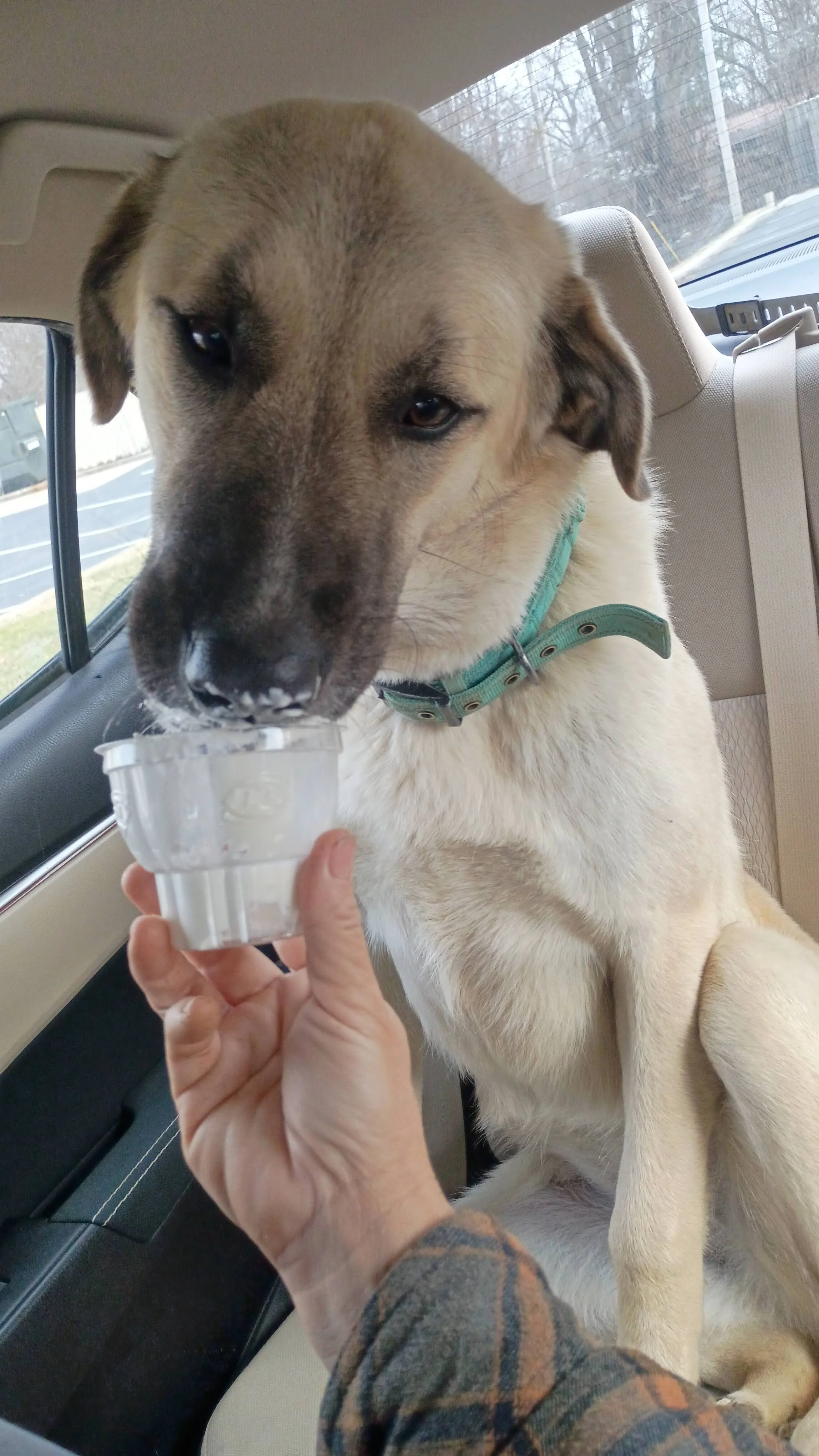
Car ride with a pup cup reward!
Personality will play some part in the bonding process. We have two sisters from the same litter, raised the same way. Izzy is naturally more of a people dog who rarely leaves our side, and Sissy is a little more adventuresome and independent, often off doing her own thing. We do have to work a little harder at bonding with Sissy, and we make an extra effort to do so. Fortunately, our dogs are very food motivated, which make training and bonding much easier. And with our younger girls, we have a bit of a cheat code - they are from a litter we raised, so we’ve bonded with them from birth.
So what other “bonding” tips are there? I briefly mentioned discipline above. It’s best not to yell or use harsh discipline with your LGDs, as they will resent you for it and lose their trust in you. In fact, instead of “no”, many recommend redirection as well as modeling and rewarding the behavior you want. LGDs are incredibly smart and tend to pick up what you want quickly. Like any dog, consistency is key. LGDs need to know they can count on you to be consistent or else they won’t see your commands as trustworthy. Typical training exercises such as leash and command training can increase bonding, like with any dog. Taking your dog on car rides is also a good idea, not just for bonding but also in case you ever need to take them to the vet. It can be impossible to convince an LGD to get into a vehicle if they’re not already in the habit. Feeding twice a day rather than free feeding is another tool to increase bonding as it fosters positive interaction twice a day. We have routines around feeding time that allow for command reinforcement - our dogs must go to their individual kennels, sit, and allow us to put their GPS collars on at meal time.
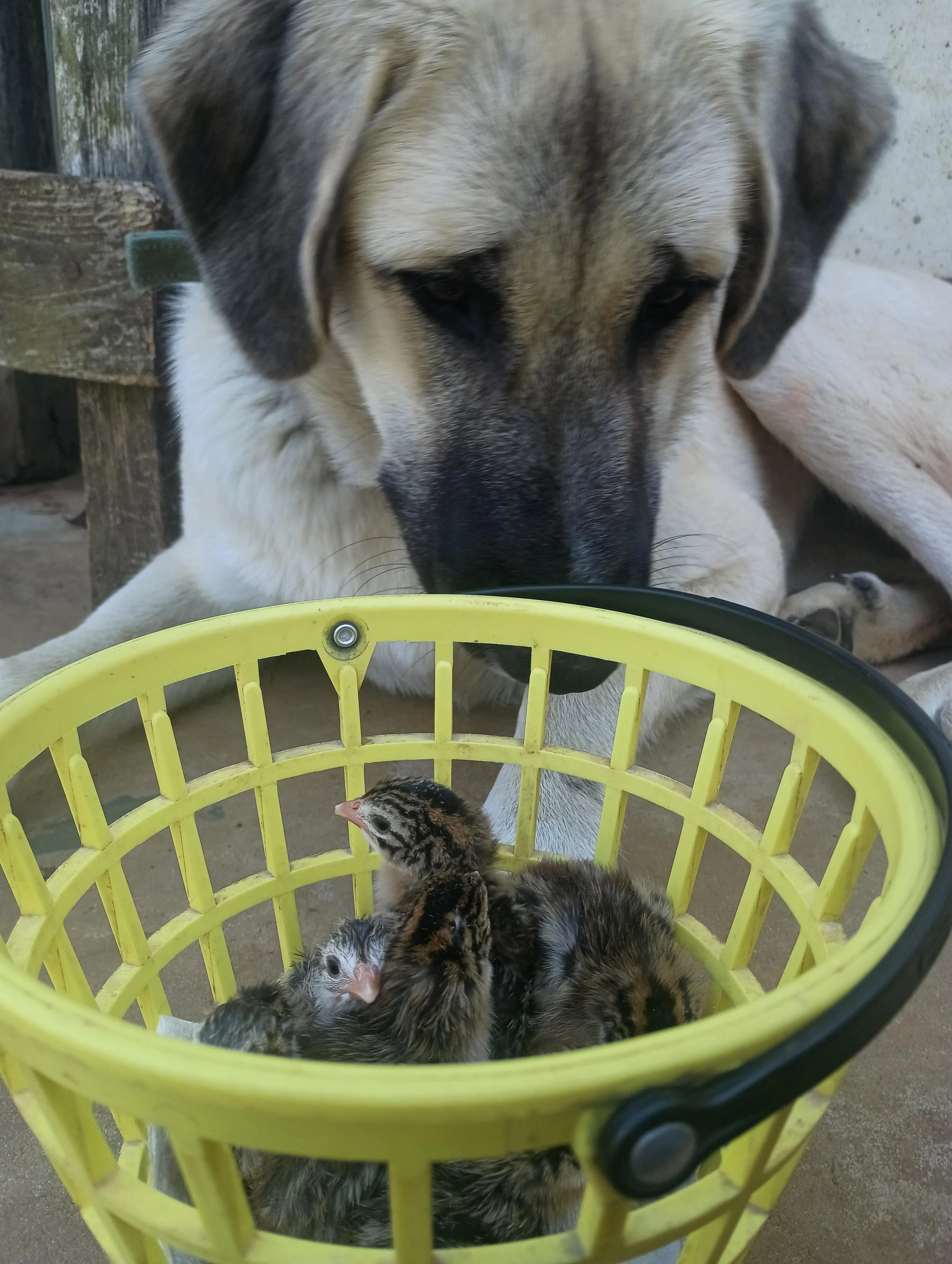
Izzy getting daily training and bonding time.
Whether you raise your dog inside or out with the livestock, the most important bonding tool is time and attention. If you do choose to raise them outside, I recommend putting extra effort into spending time with them daily. Teach them to walk on a leash, to allow grooming, to go for rides, to come when you call, etc. Sitting with them in the field for a minimum of an hour a day, watching the livestock with them, is also highly recommended. While many of us may not have that kind of time, whatever time we can afford is better than none.
Since Charlie, I have learned that there are several FB groups devoted to training LGDs, with members with many years of experience and helpful advice. Just be aware that like any online space, people often have very strong opinions on the “best” way to raise and bond with an LGD, and can be quite harsh in their disapproval of other methods. Different groups belong to the different camps on whether to raise inside or with livestock, and they sometimes offer completely opposite advice. But like families with children, owner situations vary and individual dog personalities vary, and while there are some constants in raising and training a dog, I don’t believe there is a one-size-fits-all answer. As long as you do your research and approach raising your Anatolian intentionally and with clear goals, with bonding at the very center of your strategy, you can develop a rewarding lifelong partnership with your dog.
As always, if you have any questions, feel free contact us! And look for more blogs posts soon.